

If you live in Brussels and work a full-time job, fitting exercise into your week can feel like solving a logistics problem. Between long commutes, after-work drinks at a brasserie, and the occasional 18h30 meeting that nobody asked for, the gym often loses.
But the science is clear: you don't need two hours a day to see real results. You need consistency, a plan that fits your actual life, and a few Brussels-specific shortcuts.
With the right steps, building a solid workout routine in Brussels, even when you're busy, is achievable.
Here's how to build one.
Why Most Routines Fail Busy Professionals
The most common mistake is designing a routine for your ideal week, not your real one.
Research published in the British Journal of Health Psychology found that implementation intentions (deciding when and where you'll train, not just that you will) significantly increase follow-through. In other words, "I'll work out three times a week" fails. "I'll train at My Fitness Journey Schuman on Tuesday at 6pm, Thursday at 6pm, and Saturday at 10.30am" works.
Specificity is your first tool.
The Minimum Effective Dose
The WHO recommends 150–300 minutes of moderate activity per week, or 75–150 minutes of vigorous activity. For strength training specifically, two sessions per week is enough to produce measurable gains in muscle mass and strength, according to a 2019 meta-analysis in the Journal of Strength and Conditioning Research.
That's two 45-minute sessions. Most Brussels professionals can find that — even in a busy week.
A Sample Weekly Plan for the Brussels Professional
This plan is built around a 9-to-6 schedule, with no session exceeding 50 minutes.
Monday Rest or 20-minute walk (Bois de la Cambre, Parc Cinquantenaire)
Tuesday Strength training, 45 min (gym or home)
Wednesday Rest or light mobility work Thursday Strength training, 45 min Friday Rest (you've earned it)
Saturday Longer session or outdoor activity (running, cycling, park workout) Sunday Rest or gentle movement
Two strength sessions + one active weekend day. That's the backbone. Everything else is optional.
Time-Saving Strategies That Actually Work
1. Train during lunch break. Decision fatigue is real. By 18h30, your willpower has absorbed eight hours of meetings, emails, and office politics. Lunch break training, if allowed, removes the "do I feel like it?" variable entirely. My Fitness Journey Schuman has 45 minute classes during lunch break.
2. Use compound movements. Squats, deadlifts, bench press, rows, and overhead press train multiple muscle groups simultaneously. A well-programmed 45-minute session built around these five movements is more effective than a 90-minute circuit of isolated machines.
3. Prepare the night before. Lay out your kit. Pack your bag. Remove friction. This is a small habit with a disproportionate effect on follow-through.
4. Walk more, deliberately. Brussels is a walkable city. The metro commute from Schuman to Arts-Loi is five minutes on foot. Use it. Accumulating 7,000–10,000 steps per day has documented benefits for cardiovascular health and metabolic function.. and it costs you nothing.
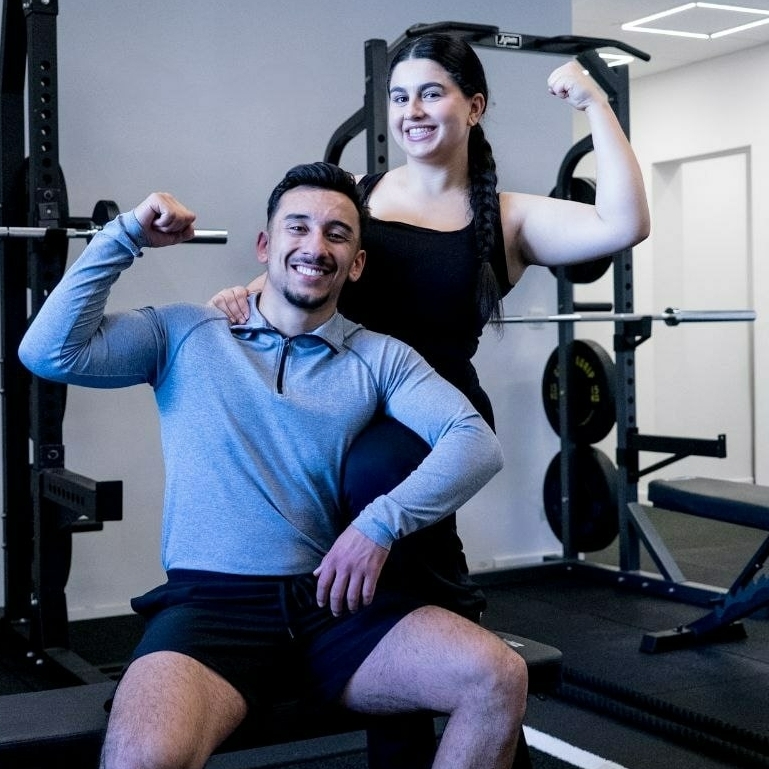
Want us to help you with building your workout routine, habits and get real fitness results? We offer small group & personal training in combination with nutrition and accountability coaching.
Click this link to book a free personal training with us to see if you like it.
Brussels-Specific Gym Tips
- Basic-Fit (multiple locations: Ixelles, Etterbeek, Saint-Gilles): affordable, well-equipped, open early. Ideal for no-frills strength training.
- Aspria Arts-Loi: premium option, suited for professionals who want a calmer environment and recovery facilities (pool, sauna).
- My Fitness Journey Schuman: higher intensity, built-in community, structured programming. Good if you struggle with self-motivation and want to take fitness to the next level.
- Outdoor options: Parc du Cinquantenaire and Bois de la Cambre both have open space for bodyweight circuits and running loops if you prefer training outside in spring and summer.
The Mindset Piece
Consistency beats perfection, every time.
A study from University College London found that habit formation takes an average of 66 days, not 21, as the popular myth goes. The implication: expect the first two months to feel like effort. That's normal. The automaticity comes later.
Two practical principles to hold onto:
Never miss twice. One missed session is life. Two missed sessions is a pattern. This single rule, applied honestly, is enough to maintain long-term consistency.
Train to 80%, not 100%. Leaving the gym feeling like you could have done one more set is a feature, not a weakness. It protects against injury, reduces recovery time, and makes the next session feel approachable, not dreaded.
The Bottom Line
You don't need to overhaul your life to get fit in Brussels. You need two solid sessions per week, a plan written around your real schedule, and enough patience to let the habit settle.
Start with Tuesday and Thursday at lunch-break.
Pick a gym that's within 10 minutes of your home or office. Show up for eight weeks.
That's it. The rest follows.
Two strength sessions per week is the science-backed minimum for measurable results. Pair this with daily walking and one active weekend session. The lunch break (12:15 to 13:00) is ideal, it avoids decision fatigue after work and fits neatly into a standard Brussels workday. Otherwise before or right after work. My Fitness Journey Schuman offers structured 45-minute small group and personal training sessions, including a dedicated lunch break slot.workout routine Brussels
How many times a week should a Brussels professional work out?
What is the best time to work out when you work 9 to 6 in Brussels?
Where can I train near Schuman in Brussels?
Sources
- Milne, S., Orbell, S., & Sheeran, P. (2002). Combining motivational and volitional interventions to promote exercise participation. British Journal of Health Psychology. pubmed.ncbi.nlm.nih.gov/12044105
- Schoenfeld, B.J., Grgic, J., & Krieger, J. (2019). How many times per week should a muscle be trained to maximize hypertrophy? Journal of Sports Science. pubmed.ncbi.nlm.nih.gov/30558493
- Lally, P., van Jaarsveld, C.H.M., Potts, H.W.W., & Wardle, J. (2010). How are habits formed. European Journal of Social Psychology. onlinelibrary.wiley.com/doi/abs/10.1002/ejsp.674